The education sector is becoming increasingly competitive, with schools, colleges, universities, coaching centers, training organizations, and online learning platforms working to attract and retain more students. Managing inquiries, admissions, student communication, follow-ups, and engagement manually can become challenging as an institute grows. This is where CRM for education institutes provides a practical technology-driven solution.
A customer relationship management system designed for educational organizations helps institutions organize student information, automate communication, improve admissions, and build stronger relationships with students and parents. By bringing important information into one centralized platform, educational institutions can reduce administrative work while creating a more organized and responsive experience.
What Is CRM for Education Institutes?
CRM is a technology solution that enables organizations to manage relationships and interactions with their customers. In education, the concept can be adapted to manage relationships with prospective students, enrolled students, parents, alumni, and other stakeholders.
A CRM for education institutes can store information such as student inquiries, application details, communication history, course preferences, admission status, and engagement activities. This gives staff a complete view of each student’s journey from initial inquiry to enrollment and beyond.
Streamline Student Enquiries and Lead Management
Educational institutions receive inquiries through websites, social media, phone calls, email, advertisements, and other channels. Without an organized system, following up with every prospective student can be difficult.
An education CRM can automatically capture and organize inquiries in one location. Admissions teams can track which students have been contacted, which applications are pending, and which prospects require additional follow-up.
Automated notifications and task assignments can also help admissions teams respond quickly, reducing the chances of losing potential students because of delayed communication.
Improve the Admission Process
The admission process often involves multiple stages, including inquiry, counseling, application, document collection, assessment, payment, and enrollment. Managing these stages manually can result in errors and delays.
CRM software can provide a structured admission pipeline that allows staff to monitor every applicant’s progress. Team members can identify incomplete applications, schedule follow-ups, and maintain relevant records throughout the process.
A transparent admission workflow can improve efficiency and make the experience easier for both students and administrative teams.
Personalize Student Communication
Students have different interests, academic goals, and communication preferences. Sending identical messages to every student may not always produce effective engagement.
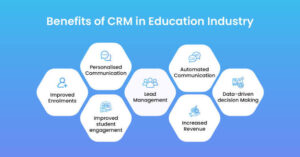
A CRM enables educational institutions to segment their audience based on courses, interests, academic levels, application status, or other relevant information. Institutions can then send personalized announcements, reminders, event invitations, course information, and follow-up messages.
Personalized communication can help students feel more valued while improving engagement with the institution.
Automate Routine Tasks
Administrative teams spend significant time performing repetitive activities such as sending reminders, updating records, scheduling follow-ups, and responding to common inquiries.
With automation features, a CRM can handle many routine communication and workflow tasks. For example, the system can automatically send reminders about application deadlines, upcoming counseling sessions, document submissions, or enrollment requirements.
Automation saves time and allows staff to focus on activities that require personal attention.
Strengthen Student Retention and Engagement
Recruiting students is only one part of an institution’s success. Maintaining engagement throughout the student’s academic journey is equally important.
CRM technology can help institutions monitor communication and engagement patterns. Staff can use these insights to identify students who may need additional support or information.
Regular communication, feedback collection, event invitations, and personalized updates can contribute to stronger student relationships and a better overall experience.
Support Data-Driven Decision-Making
Education institutions generate large amounts of information every day. A CRM can organize this information and provide useful reports and analytics.
Institutions can analyze inquiry sources, admission conversion rates, course demand, communication performance, and student engagement. These insights can help management identify successful strategies and areas that require improvement.
Data-driven decision-making allows institutions to allocate resources more effectively and develop better recruitment and engagement strategies.
Connect Different Communication Channels
Modern students may communicate through email, phone calls, websites, messaging platforms, and social media. Managing these conversations separately can make it difficult for staff to maintain a complete history.
A CRM can help bring communication records together, giving staff a clearer picture of interactions with each student. This can improve continuity and reduce the risk of students having to repeat information they have already provided.
Choosing the Right Education CRM
When selecting CRM for education institutes, organizations should consider features such as student data management, lead tracking, admission workflows, automated communication, reporting, integrations, security, and scalability.
The right CRM should be easy for staff to use and flexible enough to support the institute’s existing processes. It should also be capable of adapting as the institution expands its courses, student base, and communication requirements.
Conclusion
Technology is transforming how educational institutions attract, communicate with, and support students. A CRM can bring structure to admissions, improve communication, automate repetitive tasks, and provide valuable insights into student behavior.
By implementing CRM for education institutes, schools, colleges, universities, coaching centers, and training organizations can create more efficient processes and stronger student relationships. In an increasingly competitive education environment, a well-planned CRM strategy can help institutions improve productivity, enhance student experiences, and support sustainable long-term growth.